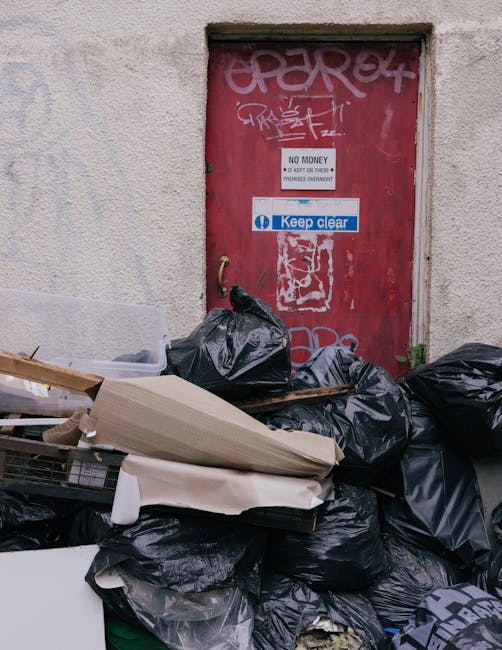
Commercial Waste in Temple

Commercial waste in Temple needs a practical, dependable approach that keeps business premises clear, tidy and easier to manage day to day. We handle commercial waste removal for premises that produce mixed office, retail and trade rubbish, with services shaped around the type and volume of material involved. The aim is straightforward: remove unwanted waste responsibly, separate recoverable materials where possible, and leave the space ready for normal use again without unnecessary disruption.
Our commercial waste service covers routine collections and one-off clearances where businesses need a managed uplift rather than a general household-style removal. That can include office waste, packaging, unwanted fixtures, redundant furniture and other non-hazardous materials that need to be taken away promptly. For businesses comparing options, the most important decisions are usually how much waste there is, what sort of material it contains, and whether access, loading or timing needs careful planning.
For a quick first step, it helps to gather a rough idea of what needs removing and when access is available. You can then ask for a quotation based on the actual load rather than broad estimates. If you already know the site layout, a short note about parking, floor level or lift access can also be useful. Clear details at the start make it easier to match the work to the right team and equipment.
Business waste removal for mixed commercial loads
We remove a wide range of business waste from premises that need more than a simple bin collection. This may include bags of general office rubbish, dismantled shelving, archived paperwork ready for disposal, damaged display items and other non-confidential materials that are no longer needed. The service is suitable when waste has built up over time or when a site is being reorganised and needs a larger clear-out.
Mixed commercial loads often require a sensible split between items that can be reused, recycled or disposed of as residual waste. We plan the removal around that mix, so different materials can be handled in a way that suits their condition and composition. Where useful, we also separate bulky items from lighter waste to make loading safer and more efficient. That approach is especially practical in shared buildings, smaller units and sites where there is limited storage space before collection.
Useful business waste types often include paper, cardboard, broken office equipment, packaging, shop fittings and end-of-line stock packaging. In many cases the most helpful quote is based on both the amount of material and the access to the premises, because these factors affect how the work is carried out. Accurate descriptions are better than vague guesses, particularly where the load contains awkward or heavier pieces that need separate handling.
Office waste removal and workplace clear-outs

Office waste removal is designed for workplaces that need desks, chairs, filing units, monitors, printers or general office clutter taken away in an organised way. It is also useful for businesses refreshing a workspace, closing a department or clearing a storage area that has filled up with unused materials. The service can focus on single rooms, whole floors or back-room storage areas, depending on what needs to go.
When office waste is being cleared, the main practical question is usually whether items are loose, stacked or still in use elsewhere on site. We can then plan the removal in a sensible order, which helps avoid unnecessary handling and keeps the process efficient. Where there is a mixture of reusable furniture and ordinary rubbish, the work can be arranged so the different categories are dealt with appropriately rather than treated as one undifferentiated load.
If you are preparing a quotation request, it is useful to note the number of rooms involved, any time restrictions and whether larger items need to be carried through tight corridors or stairs. That does not need to be exhaustive, but it helps us understand the scale of the job. One clear list of items is usually more helpful than several short messages. You can also ask for advice on how to separate general waste from items that may need specific disposal methods.
Furniture disposal and bulky item removal
Furniture disposal is a core part of commercial waste work because offices, shops, cafés and other premises often need bulky items cleared when layouts change. We remove chairs, tables, cabinets, shelving, desks and similar items that are no longer required on site. Where furniture is still in reasonable condition, it may be suitable for a route that allows materials to be recovered or diverted from disposal, depending on the item and its state.
Bulky item removal needs care because size, weight and access can matter more than the number of individual pieces. A single heavy cabinet may be more awkward than several bags of lighter waste, especially if it has to be moved through narrow hallways or down steps. That is why a quotation based on the actual furniture list is generally more reliable than a broad guess based only on room size. It also helps to know whether items are already dismantled or still assembled.
The work can be planned around day-to-day operations so that the removal happens with as little interruption as possible. In many commercial settings, the best outcome is a tidy empty area that can be reused straight away for storage, display or new equipment. If you are comparing disposal options, it is sensible to ask how the load will be assessed and what happens to the different materials once they leave the site.
Shop and premises clearances
Shop and premises clearances are useful when a trading space needs a fuller clear-out than ordinary bin collections can handle. This may involve packaging, broken displays, counter units, shelving, stock-room waste and other items that have accumulated during trading, refurbishment or a change in layout. The service is equally relevant for front-of-house and back-of-house areas, as long as the waste is suitable for standard commercial removal.
Premises clearances often need a balance between speed and care. Fixtures may need to be moved without damaging floors, walls or remaining stock, and some items may need to be removed in a particular order to keep walkways open. We can work through that in a logical sequence, so the clearance matches the site rather than forcing the site to adapt to the clearance. Good planning matters most when the property is still partly operational.
When seeking a quotation, it is helpful to state whether the premises are fully closed, partly occupied or being prepared for handover. Those details affect access, timing and the amount of handling involved. A clear description of the material type, together with any stairs, loading restrictions or restricted entrance points, makes the quoted price more dependable and the work easier to organise.
How we approach commercial waste collections

Commercial waste collections work best when they are simple to understand from the outset. We usually begin by identifying the main material types, checking whether any items need to be dismantled, and considering the safest way to load them. That keeps the collection practical for the customer and allows the removal to be paced sensibly around the premises, rather than forcing everything into one rigid method.
- Assess the types of waste and likely loading space.
- Separate bulkier items from lighter general rubbish where needed.
- Plan access, parking and movement through the property.
- Remove the load in a way that suits the site and contents.
- Leave the area clear once the agreed materials have been taken away.
For many customers, the key decision is whether the waste should be removed in one visit or split across several smaller clearances. That depends on the amount of material, the urgency of the job and how easily the premises can be accessed. If you are requesting a quotation, a concise inventory and a note about preferred timings are usually enough to start the process. From there, you can compare the scope clearly and decide what level of service fits the site.
Office furniture and equipment disposal
Office furniture and equipment disposal covers the items that commonly build up when businesses refresh work areas or replace old fittings. Desks, task chairs, filing cabinets, cupboards, broken small equipment and surplus storage units are all typical examples. The work is useful when the goal is not simply to empty bins but to take away larger items that no longer serve the workspace or storage plan.
This type of removal often benefits from grouping similar items together before collection. Paper waste, reusable furniture and broken equipment may all require a different approach, even if they are leaving the premises at the same time. By considering the mix carefully, the service can be organised so the removal is neat and efficient. In some cases, dismantling a piece beforehand can make access easier, but it is not always necessary.
Businesses asking for a price should think about whether equipment still contains cables, detachable parts or heavy components that need separate handling. That can affect the removal method, particularly where items are awkward to carry or stack. A straightforward description of the furniture and equipment involved will usually be enough to prepare a useful quotation without overcomplicating the enquiry.
About Temple
Temple is a small central London district on the north bank of the River Thames, best known for the legal quarter that sits between the Strand and the river. Its name is associated with the historic Knights Templar, whose estate later became linked to the Inner Temple and Middle Temple, two of the city’s four Inns of Court. The area is compact, but it contains a striking mix of medieval planning, later rebuilding and modern office architecture, so a short walk can move from quiet courtyards to busy riverside routes. Temple Church is one of its best-known landmarks, with origins in the 12th century and a prominent circular nave that reflects the legacy of the Knights Templar. Nearby, the Temple area includes formal gardens, narrow lanes and a number of legal and professional buildings that give it a distinctive atmosphere compared with the surrounding parts of Westminster and the City. Its riverside setting also places it close to Embankment, Blackfriars and the broader Strand corridor, while Temple Underground station provides a clear transport link within central London. The district has long been associated with law, chambers and professional offices, yet it also has quieter landscaped spaces that contrast with the surrounding traffic and commercial activity. This combination of history, water frontage, institutional buildings and enclosed courtyards makes Temple a highly distinctive part of London’s central core.
Hazardous and specialist waste considerations

Not every business load can be treated as routine commercial waste. Some materials need extra consideration because they may be classed as hazardous, sensitive or specialist in nature. That can include items with chemical residues, certain electrical components, damaged refrigeration units or other material that should not be mixed with standard office or shop waste. In these cases, the important point is not speed alone, but choosing the right handling route for the material involved.
We can discuss the waste in plain terms and identify whether it belongs in the normal commercial stream or needs separate attention. If the load includes specialist items, it is better to flag them early rather than leave them to the day of collection. This allows the removal to be planned around any constraints, access concerns or handling requirements that may apply. The more clearly the waste is described, the easier it is to avoid confusion and unnecessary delays.
When requesting a quotation for unusual items, it is helpful to mention quantities, packaging, labels and whether anything is damaged or leaking. Those practical details matter because specialist disposal often depends on what the item is, not just how large it is. A measured approach protects the site, the people handling the waste and the overall accuracy of the quotation.
Pricing factors and quotation details
Commercial waste pricing is usually shaped by a combination of load size, waste type, access and labour needed to move the items. A small pile of awkward furniture may take longer than a larger amount of light packaging, so it is not enough to judge cost by volume alone. The best quotation is based on the actual work involved, including how far items need to be carried and whether they must be broken down first.
To make the quotation process smoother, it helps to provide a single, practical description of the job rather than a long back-and-forth about every object. If possible, note the main waste categories, the number of floors or rooms, and any obstacles such as narrow staircases, busy loading areas or restricted opening times. These details are not optional trivia; they are the factors that usually determine whether the work can be completed efficiently. Accuracy at the beginning reduces surprises later.
If you are unsure how to describe the waste, start with the larger or more awkward items first and then add the smaller material around them. That gives a clearer picture of the job than trying to list everything in perfect detail. You can then request a quotation with confidence and decide whether a one-off clearance or a repeat arrangement is the better fit for the premises.
Recycling, sorting and responsible disposal
Responsible commercial waste removal is not only about taking items away. It also involves thinking about what can be separated, what can be recovered and what needs to go to disposal as residual waste. Cardboard, certain metals, office furniture components and other materials may be handled differently depending on their condition and composition. That separation helps make the process more considered than simply loading everything together.
For business customers, this matters because the waste stream often contains a mix of materials from different parts of the premises. A stock room, office and display area can each produce different kinds of waste, even when the clear-out happens on the same day. By treating those categories carefully, the removal can support a more orderly outcome. It also gives the customer a clearer sense of how the waste is being managed once it leaves the site.
Where customers want to discuss disposal options, it is sensible to ask which items can be separated before collection and which should stay together for handling on site. That conversation does not need to be complicated. The aim is simply to make sure the removal method matches the material, rather than assuming every item is treated in the same way. Clear sorting choices usually lead to a better organised clearance.
Booking and preparing for collection

Booking a commercial waste collection is easier when the job is described in a practical way from the beginning. A short summary of the waste, the access and the preferred timing is usually enough to move forward. If the premises are occupied, it can also help to mention the best point of contact on the day so that collection can be coordinated without confusion. This keeps the process straightforward for businesses that need the waste removed efficiently and with minimal disruption.
Before collection day, it is useful to place the waste in a sensible location if that can be done safely. That might mean gathering bags in one area, moving smaller items away from walkways or keeping the load separate from anything that is staying on site. You do not need to over-prepare, but a tidy starting point often makes the work easier to complete. If there are items that should not be moved by mistake, it is best to mark them clearly or mention them in advance.
If you are ready to arrange commercial waste removal in Temple, send over the details and ask for a quotation. A concise description is enough to begin, and the final step is simply to agree the scope that suits your site. For a direct next step, request a quotation today and let us know what needs taking away.